

IQPAuthor: FM Vidar Grahn
IQP stands for "Isolated Queen's Pawn" and refers to a chess structure where one side has a d-pawn but no c- or e-pawn. Because of this, the d-pawn is "isolated" and cannot be defended by any fellow pawns.
The IQP is one of the most common and fundamentally important pawn structures in chess. It arises across a vast array of openings, including the Queen's Gambit Accepted (QGA), the Slav, the French Tarrasch, the Caro-Kann, the Sicilian Alapin, and Tarrasch, to name just a few.
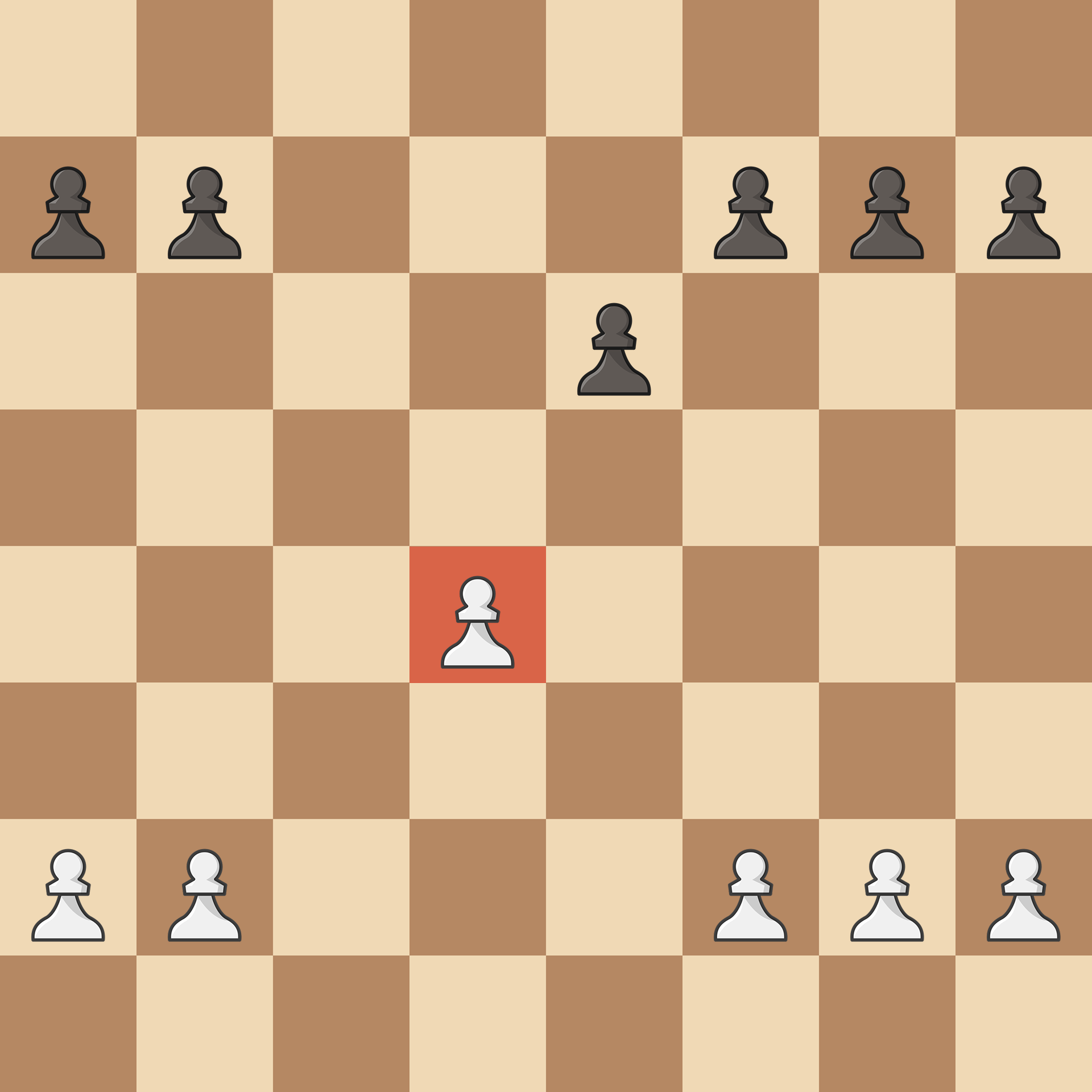
This structure can commonly occur for both colors. However, for the sake of simplicity in this article, we will assume that White is the player with the IQP.
Generally speaking White has better middlegame prospects, while Black has better prospects in an endgame. Therefore, White’s main aim will be to build an attack, while Black’s hope will be to neutralize that attack, simplify the position, and transition into a superior endgame.
White's Plans (The One With The IQP)
1. Create a Kingside Attack
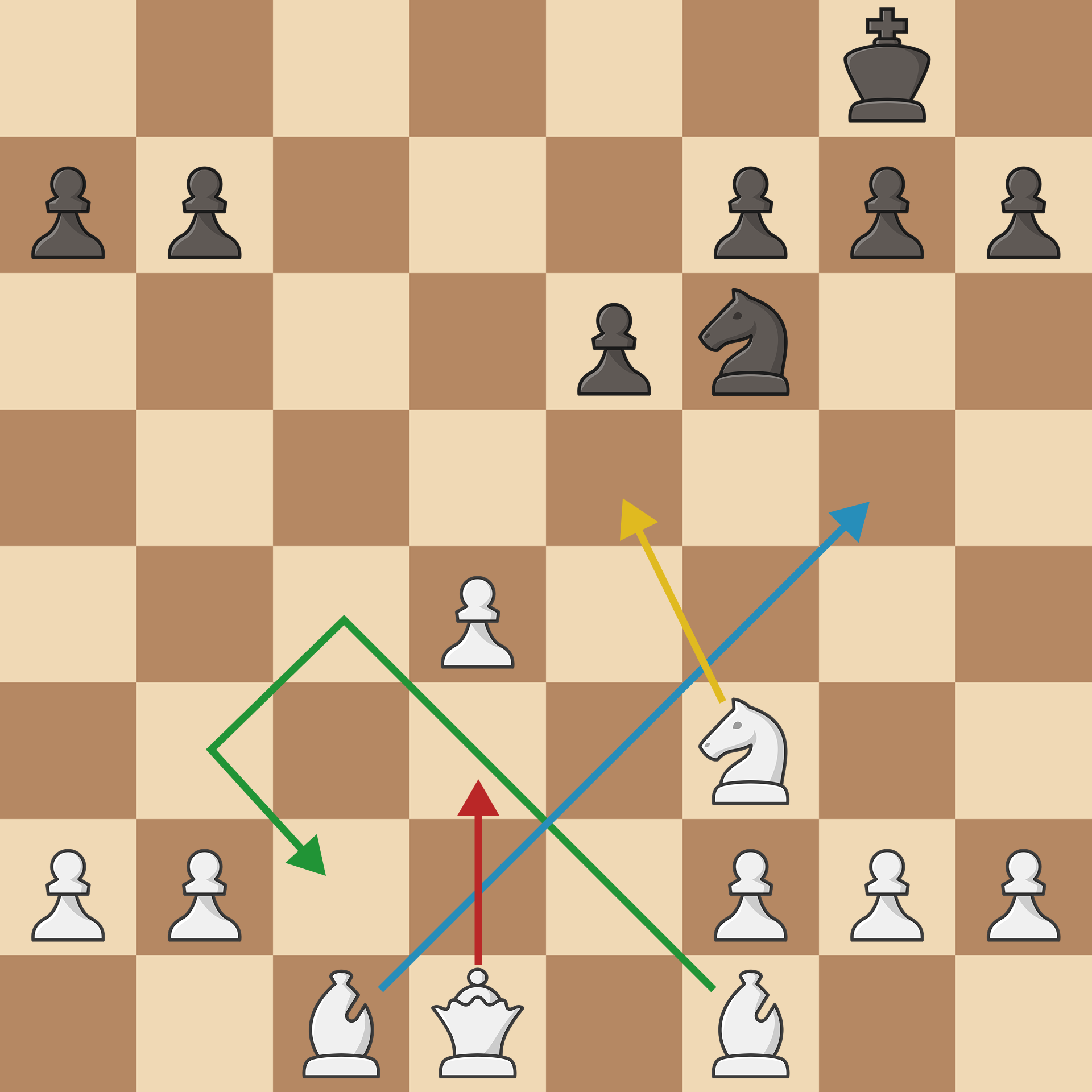
To utilize our dynamic edge, we need to set up our pieces in a way to prepares a kingside attack. Most standard attacking plans will include the moves Ne5, Bg5, and setting up a battery with Qd3 and Bc2.
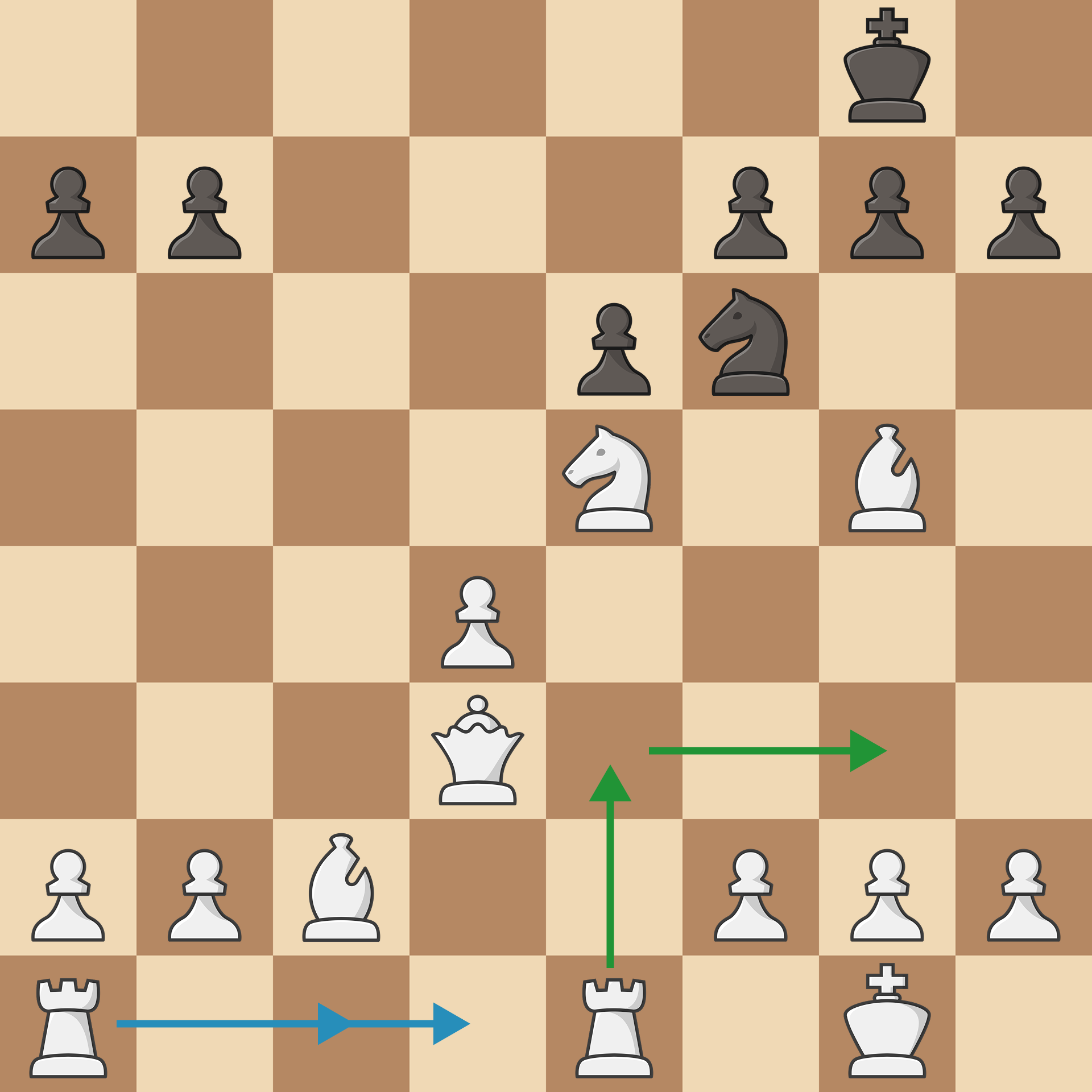
Rooks are typically placed on e1 and d1 (or c1), and a rook lift/transfer via the third rank is a common attacking motif.
2. Break With d4-d5
Often in IQP positions black is a bit cramped or underdeveloped. To exploit this, White can look to push the d-pawn to open lines in the center. This can trade off the isolated pawn to net an overwhelming initiative.
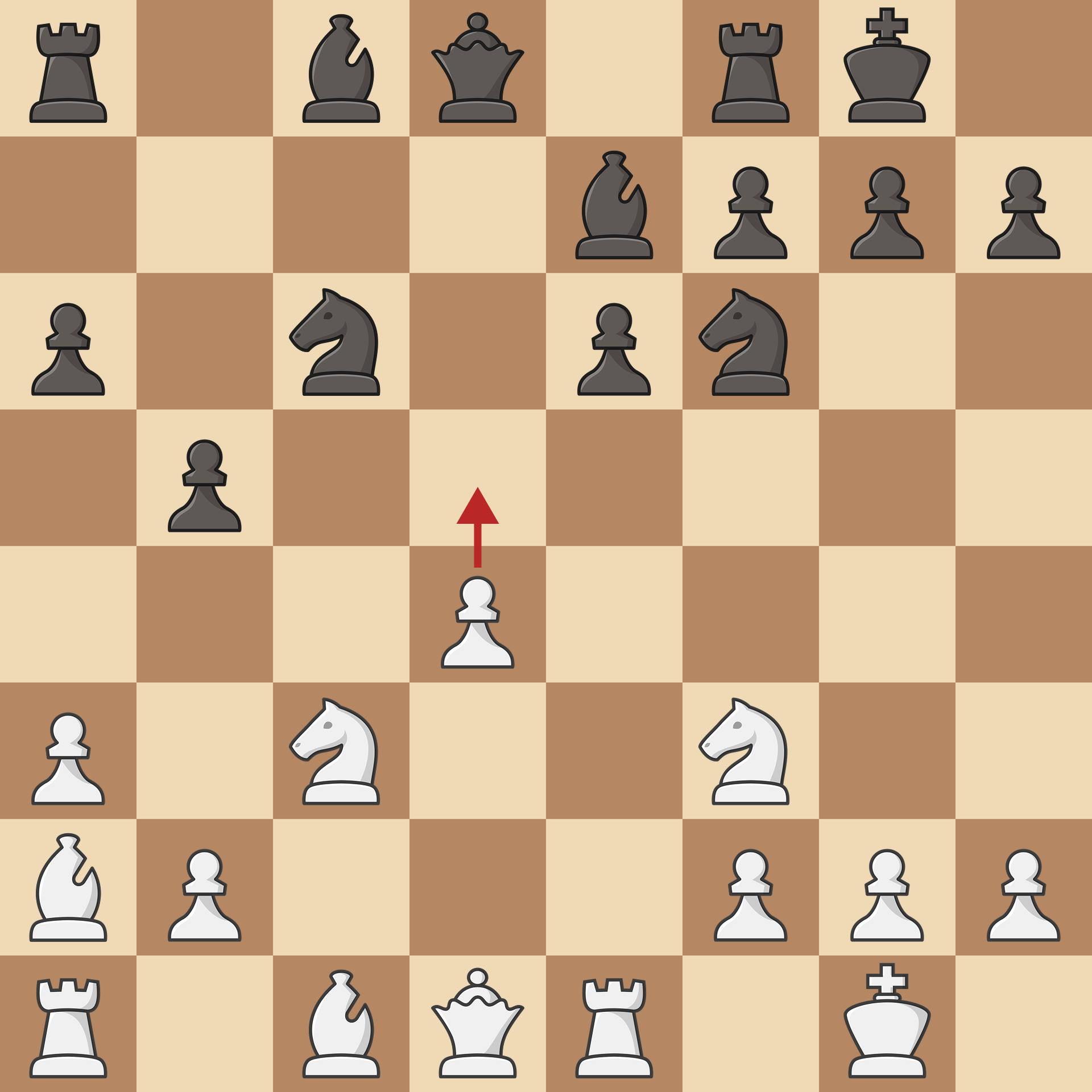
In the position shown above, White already has a substantial advantage after d4-d5. This is because black is underdeveloped and not ready to face an opened up position.
Black's Plans (The One Without The IQP)
1. Trade pieces
Black's main goal is to exchange pieces and thereby neutralize White's attacking potential. In particular, exchanging White’s "good" light-squared bishop is a massive defensive victory.
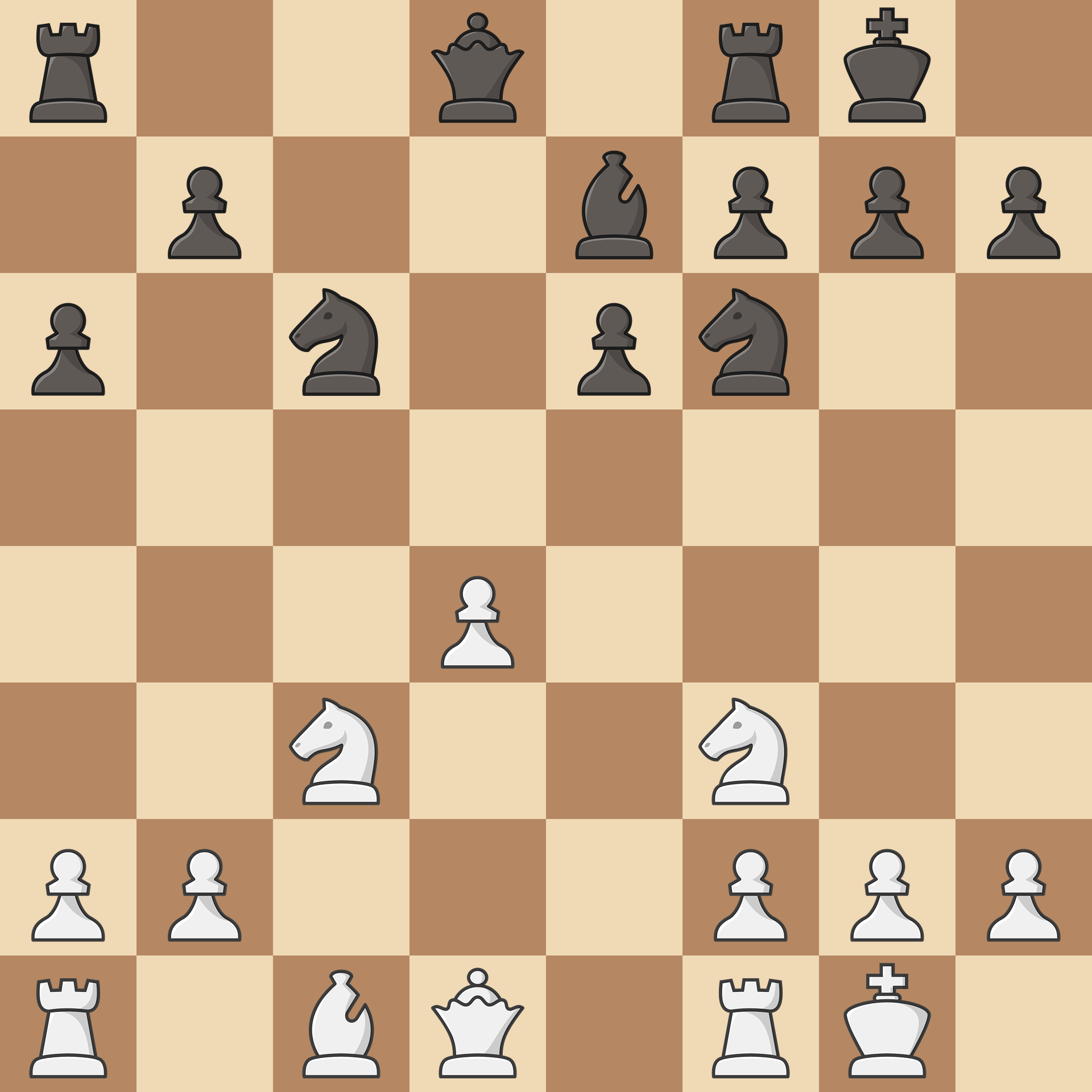
For example this made up position lacks light-square bishops, and black is comfortably better. This is because white no longer has any good attacking chances, and d4-d5 break ideas are harder to implement now that there is no bishop supporting it. If the bishops were on the board, let's say on b3 and c8, white would be the one in control.
2. Blockade the d5-Square
The second plan is simply to defend against White's second plan, the d4-d5 break. We do this by blocking the pawn by putting a knight there. While preventing the break it also controls some key-squares. In an endgame, a rook, bishop, or even the king becomes incredibly strong when anchored on this blockade square.
Model Games
Playing With The IQP
- Vadim Zvjaginsev - Rodrigo Rafael Vasquez Schroeder 1-0
- Pavel Simacek - Baadur Jobava 0-1
- Artur Yusupov - Eric Lobron 1-0
Playing Against The IQP
Sources & Credits
The framework for this guide is mainly inspired by the excellent structural breakdowns in Mauricio Flores Ríos' Chess Structures: A Grandmaster Guide. To build on his foundational work, I have integrated my own training notes and added some additional model games.